

SiteGround has spent years building a strong reputation within the WordPress community. For many website owners, developers, and agencies, the company has been associated with reliable infrastructure, responsive support, and a relatively straightforward hosting experience.
That long-standing reputation is precisely what makes the company’s latest decision so surprising.
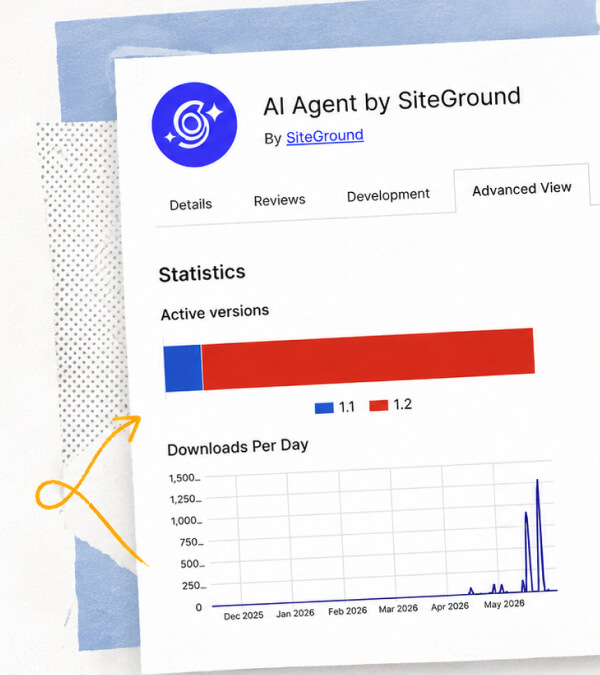
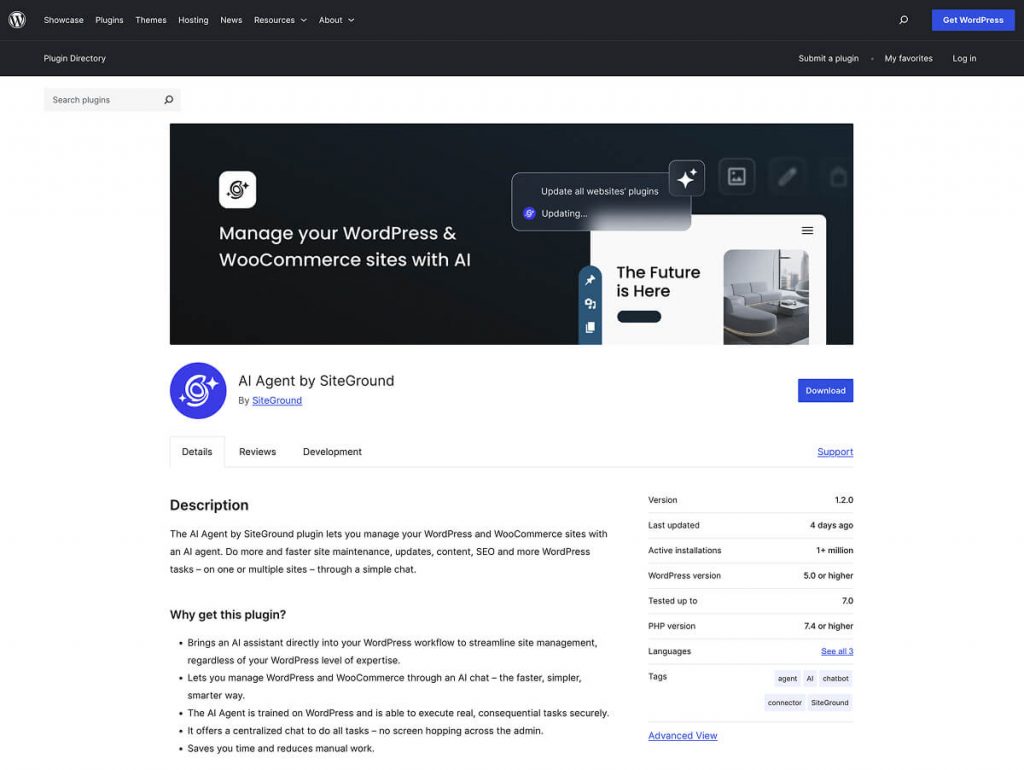
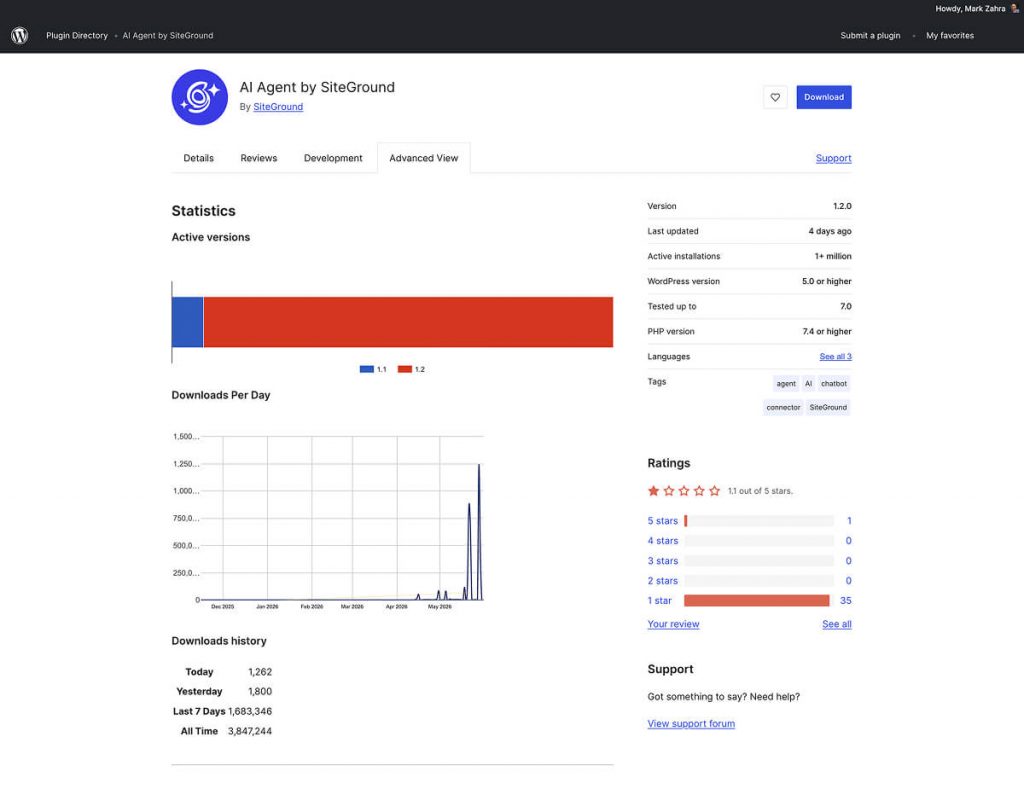
The AI Agent by SiteGround plugin recently began appearing on WordPress websites hosted by the company. Users did not search for the plugin, download it, or manually activate it. Instead, SiteGround automatically installed and activated the software across more than one million customer websites.
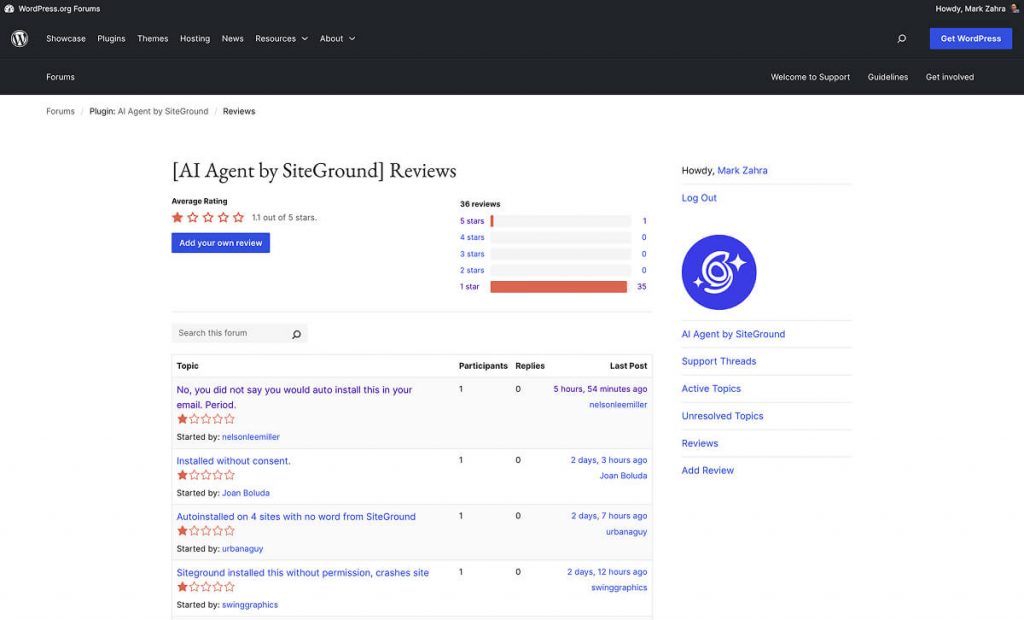
Within only a few days, the plugin received an average rating of approximately 1.1 out of 5 stars in the WordPress.org plugin directory. At the time the controversy emerged, 35 of its 36 published reviews carried the lowest possible rating.
A newly released plugin reaching more than one million active installations would normally be considered a major achievement. However, when that number is combined with an overwhelmingly negative rating, it points to something much more serious than an ordinary product-quality issue.
This is fundamentally a controversy about user consent, control, and the speed at which a company can damage trust that took years to earn.
What Happened With the SiteGround AI Plugin?
The plugin is technically identified as sg-ai-studio and is publicly listed under the name AI Agent by SiteGround.
On paper, the product offers several potentially useful capabilities. It is designed to help users manage WordPress and WooCommerce websites through a conversational AI interface.
Depending on how it is configured, the plugin can assist with tasks such as:
- Editing and managing website content.
- Installing or updating WordPress plugins.
- Performing website maintenance operations.
- Managing WooCommerce-related activities.
- Applying changes across multiple websites.
- Completing administrative tasks through a chat interface.
There may be genuine value in a tool that simplifies routine WordPress management, particularly for users who are uncomfortable navigating multiple administrative screens.
However, the plugin’s technical capabilities were never the central reason for the backlash.
The controversy began because SiteGround placed the plugin on customer websites without obtaining clear and meaningful permission in advance.
Website owners and administrators logged into WordPress and discovered unfamiliar software that had already been installed and activated. The plugin was ready to connect to SiteGround’s external AI service as soon as someone initiated the integration.
For individual website owners, this was already concerning. For agencies and freelancers responsible for maintaining client websites, it presented an additional layer of risk.
The response from users was swift and overwhelmingly negative.
Many reviews on WordPress.org focused specifically on the lack of consent. Users accused SiteGround of installing software without permission, described the rollout as misleading, and said the decision had changed their opinion of the hosting company.
The discussion soon spread beyond the WordPress plugin directory.
A thread published in the official SiteGround community on Reddit warned that the company had inserted an AI plugin into every WordPress installation connected to some customer accounts.
The post questioned how such a deployment had received internal approval in the first place. Judging by the wider community response, many SiteGround customers were asking the same question.
SiteGround’s Explanation—and Why It Failed to Resolve the Issue
SiteGround did not completely ignore the backlash.
Representatives from the company responded directly in the Reddit discussion and participated in support conversations. That willingness to engage was better than remaining silent, but the company’s explanation did not address the main concern raised by users.
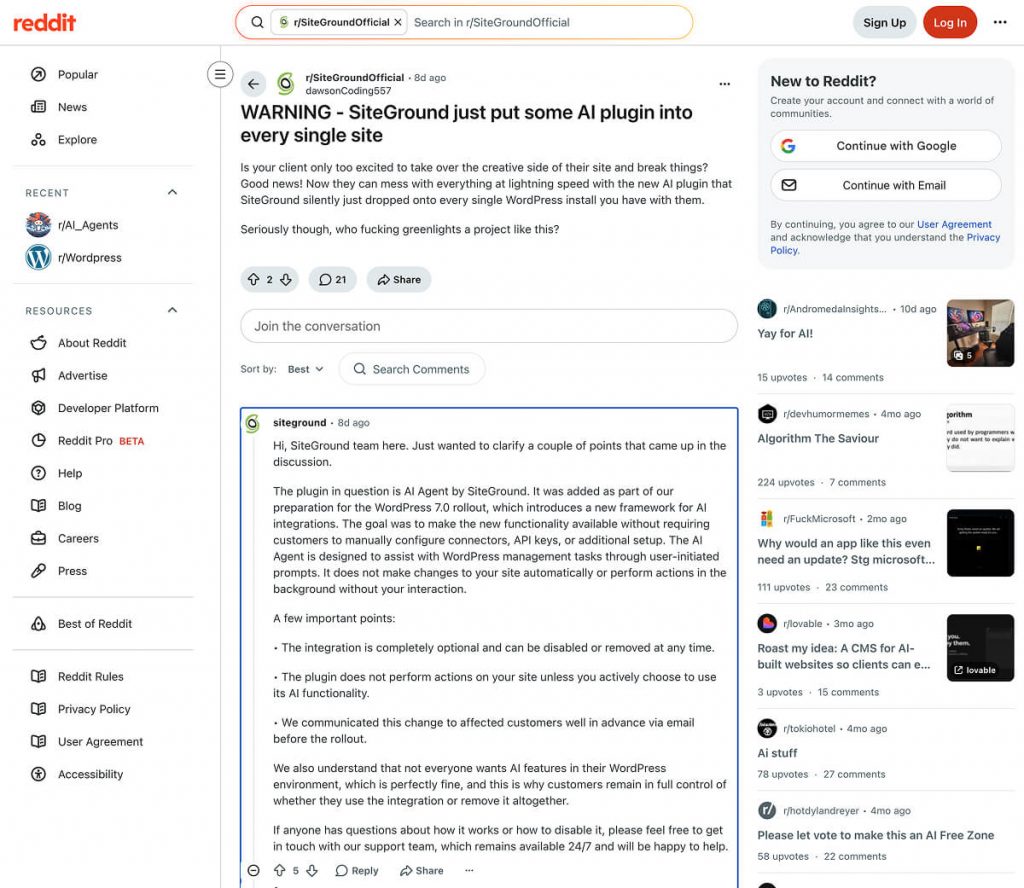
According to SiteGround, the plugin was introduced as part of its preparations for WordPress 7.0 and the platform’s emerging AI integration framework.
The company wanted to make AI-powered WordPress functionality available without requiring customers to manually configure connectors, API credentials, or other technical components.
SiteGround also emphasized several points in its defense:
- The plugin does not independently make changes to a website.
- It does not perform administrative actions in the background.
- Users must intentionally connect and interact with the AI functionality.
- The plugin can be deactivated or deleted.
- Customers reportedly received an email notification before the rollout.
From a narrow technical perspective, these explanations may be accurate.
However, they answer a different question from the one customers were asking.
Users were not primarily claiming that the plugin would secretly destroy their websites while nobody was watching. Their objection was that a hosting provider had installed and activated additional software on systems they were responsible for managing without first obtaining explicit approval.
The problem was not simply whether the plugin was safe.
The problem was whether SiteGround had the right to place it there without asking.
Saying that users could remove the plugin later did not resolve the consent issue. An opt-out mechanism is not equivalent to receiving permission before making a change.
The situation becomes more complicated on websites managed for clients.
A professional developer may understand the plugin and decide not to connect it. A client with administrator access, however, may notice a new AI tool, become curious, and begin experimenting with it.
Any resulting modifications could then become the responsibility of the developer or agency maintaining the website.
SiteGround responded to a concern about trust with an explanation about product behavior. That disconnect is a major reason its public response failed to calm the controversy.
When customers say that software should not have been installed without their approval, explaining that the software is optional and harmless does not demonstrate that the underlying objection has been understood.
The Larger Issue Is SiteGround’s Reputation
SiteGround did not become a respected WordPress hosting provider overnight.
Its reputation was built gradually through years of customer interactions, technical support, infrastructure performance, and positive recommendations from users.
Trust tends to accumulate quietly.
It develops when support teams solve difficult problems, websites remain available, billing practices appear fair, and customers feel that the company respects their interests.
Unfortunately, trust is not gained and lost at the same rate.
A company may spend years building credibility, only to weaken it through a single poorly judged decision.
SiteGround’s ability to deploy software across more than one million websites demonstrates the scale of its reach. It also demonstrates the amount of control customers have entrusted to the company.
That reach should increase the company’s sense of responsibility. Instead, the rollout made many customers feel that their trust had been treated as a convenient distribution channel.
The wording used in the negative reviews is particularly revealing.
Most complaints were not simply reports of bugs, compatibility problems, or missing features. Users were questioning their relationship with SiteGround itself.
Some indicated that they were reconsidering their loyalty to the company. Others suggested that the automatic installation had permanently changed how they viewed the brand.
That is considerably more damaging than a normal software complaint.
A technical bug can be patched. An interface can be redesigned. A feature can be improved.
Restoring confidence after customers begin questioning whether a company respects their control over their own websites is far more difficult.
The financial and reputational cost of that doubt may ultimately exceed anything SiteGround invested in building the AI plugin.
The Rollout Also Creates an Unfair Advantage in the Plugin Directory
The controversy extends beyond the relationship between SiteGround and its hosting customers.
It also exposes a weakness in the way plugins are ranked and discovered through the WordPress.org directory.
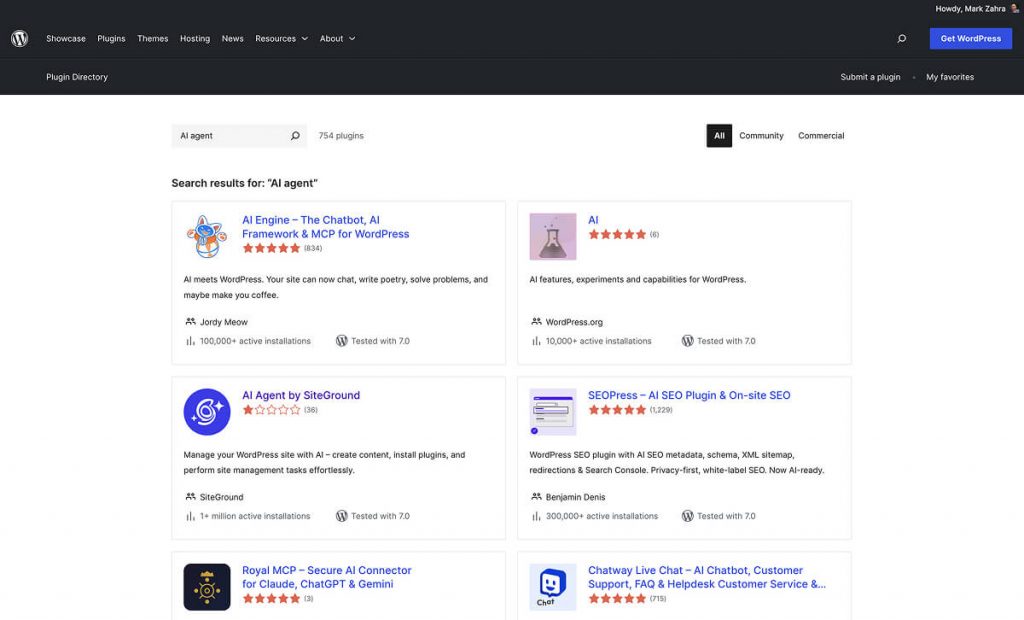
When users searched for the term “AI agent,” the SiteGround plugin quickly appeared near the top of the search results.
At one point, it occupied the third position, ranking above hundreds of other products whose users had intentionally searched for, selected, and installed them.
This creates an obvious contradiction.
Active installation numbers are an important ranking signal because they normally indicate adoption and popularity.
Under ordinary circumstances, a high number of active installations suggests that users discovered a plugin, decided that it met their needs, and voluntarily added it to their websites.
That assumption breaks down when a hosting company can automatically distribute its own plugin to more than one million installations.
In that situation, the installation count does not represent one million independent purchasing or adoption decisions. It represents the distribution power of the hosting provider.
Independent WordPress plugin developers often spend years reaching milestones such as 10,000, 50,000, or 100,000 active installations.
They gain users gradually through product development, support, marketing, documentation, reviews, and word-of-mouth recommendations.
Each installation must be earned.
A large hosting company can bypass that process by deploying a plugin directly to its existing customer base. Within days, a new product can overtake established competitors regardless of its rating or the level of genuine demand.
The result is a directory ranking that no longer accurately reflects user preference.
Instead of highlighting the tools users have actively chosen, the system may reward the products that companies have the power to distribute automatically.
This is not solely a problem for SiteGround to solve. It also raises an important question for the administrators of WordPress.org.
The plugin directory may need to reconsider how installation numbers influence search rankings when those installations originate from bulk hosting-provider deployments.
Otherwise, other hosting businesses may follow the same strategy.
Any provider with a large customer base could introduce a plugin into a competitive category, automatically place it across thousands or millions of websites, and gain immediate visibility over independent developers who spent years building authentic adoption.
Update: June 11, 2026
Following the original publication of the controversy, the SiteGround plugin reportedly moved from third to second place in the WordPress.org search results for “AI agent.”
Its average rating increased slightly to approximately 1.3 stars, although 59 of its 64 reviews still carried a one-star rating.
The matter was also raised directly with WordPress.org through Meta Trac ticket #8298.
The proposal suggested limiting the influence that active installation numbers can have on plugin rankings and giving greater weight to ratings when a plugin has received a meaningful volume of user reviews.
Such adjustments could help prevent automatically deployed plugins from gaining disproportionate visibility without genuine user demand.
What Technology Companies Should Learn From This
The SiteGround controversy illustrates a temptation faced by many software and platform companies.
When a business has developed a feature it believes customers will appreciate, and it already controls a direct distribution channel, the fastest route to adoption is to deploy the feature automatically.
The infrastructure already exists. The users are already present. A company may only need to activate a deployment process to reach an enormous audience.
But the easiest path to adoption is not always the most responsible one.
Make New Features Opt-In by Default
Any feature that modifies, extends, or interacts with customer-owned systems should generally require active approval.
Under an opt-in model, users receive information about the feature and decide whether they want to install or activate it.
Under an opt-out model, the company assumes permission, performs the action, and leaves customers responsible for reversing the decision.
That distinction matters.
Opt-in respects customer control. Opt-out prioritizes adoption metrics and operational convenience.
A Notification Is Not the Same as Consent
Sending an email does not automatically mean a customer has agreed to a change.
People receive large volumes of email. Messages may be filtered, overlooked, misunderstood, or sent to an account holder who is not directly responsible for maintaining the website.
Even when a message is successfully delivered, notifying someone that an action will occur is not the same as asking for permission to perform it.
A company may be able to prove that it issued a notice. That proof does not establish informed consent.
Distribution Power Should Be Treated as a Responsibility
The ability to place software on one million customer websites is not simply a growth opportunity.
It represents a significant position of trust.
Customers allow hosting providers to manage servers, security systems, backups, updates, and other critical infrastructure. That access exists because users believe the provider will exercise restraint and act in their interests.
Using that privileged position as a shortcut for distributing a new commercial or strategic product risks damaging the trust that made such distribution possible.
Product teams often aim to eliminate friction from the adoption process.
Normally, reducing unnecessary friction improves user experience. But when “frictionless adoption” means removing the moment at which a user is asked for permission, convenience and consent come into conflict.
Consent must take priority.
A company’s reputation is shaped by how it behaves when those two goals cannot coexist.
SiteGround Still Has an Opportunity to Repair the Damage
The controversy does not necessarily have to cause permanent harm.
SiteGround has spent years developing goodwill within the WordPress ecosystem, and that history may give the company an opportunity to recover.
A meaningful response would begin by stopping automatic installations and converting the plugin to a genuinely optional, opt-in product.
Customers could be introduced to the tool through the SiteGround dashboard, onboarding screens, educational content, or a clearly presented installation prompt.
Those who see value in the AI features could choose to enable them. Those who do not want the integration could continue using their websites without having to remove unfamiliar software.
SiteGround would also benefit from acknowledging that the deployment method was a mistake.
There is an important difference between saying that feedback has been passed to a product team and directly accepting responsibility for a decision that customers considered inappropriate.
Companies often recover more quickly when they clearly admit that they made the wrong choice.
Continuing to explain why the rollout was technically safe may only reinforce the impression that the core objection has not been understood.
The strength of SiteGround’s previous reputation is also the reason the backlash has been so intense.
Customers expected more from the company because many of them trusted it. That expectation is not only a liability; it is also evidence that the relationship may still be worth repairing.
One million active installations would normally represent an extraordinary product milestone.
In this case, the number carries a very different meaning because those installations did not result from one million individual choices.
The broader lesson for every technology company is simple:
Protect the trust your customers have given you. It may take years to build, but a single decision can spend it remarkably quickly.
When was the last time one corporate decision completely changed the way you viewed a company you previously trusted?