

The Shopify Partner Program sounds simple from the outside.
You sign up, get access to Shopify’s partner tools, build stores or products for merchants, and earn money through the ecosystem.
That description is technically true, but it misses the most important point:
Joining the program does not automatically create income.
A Shopify Partner account gives you access to tools, development environments, referral tracking, education, and revenue opportunities. What it does not give you is a guaranteed client pipeline, a certification badge that instantly builds trust, or passive income just because your account exists.
For freelancers, agencies, app developers, and theme builders, the program can be extremely useful. But its value depends entirely on how you use it.
This guide breaks down what the Shopify Partner Program actually is, how partners earn money, what the revenue-share structure looks like, who should join, and what mistakes to avoid.
What the Shopify Partner Program Actually Is
The Shopify Partner Program is a free program for people and companies that build, support, market, or extend Shopify stores.
It is designed for four main groups:
- Freelancers building Shopify stores for clients.
- Agencies offering design, development, migration, marketing, or CRO services.
- App developers creating software for the Shopify App Store.
- Theme developers building themes for the Shopify Theme Store.
It is important to understand what the program is not.
A Shopify Partner account does not automatically make you a Shopify Expert. It does not place you inside Shopify’s official service-provider directory by default. It also does not enroll you in Shopify’s affiliate program.
These are separate concepts.
A Shopify Partner is someone with access to partner tools and monetization options.
A Shopify Affiliate is usually a content creator or marketer earning referral bounties through tracked links.
A Shopify Expert or directory-listed partner has passed additional requirements and is presented more formally to merchants looking for help.
Those distinctions matter because many beginners assume that signing up as a partner gives them official marketplace visibility or merchant leads. It does not.
The Partner Program is best understood as infrastructure.
It gives you the tools to build around Shopify. You still need to bring the skill, offer, positioning, and client acquisition strategy.
What You Get After Joining
The biggest benefit of the Shopify Partner Program is not the payout structure.
For many freelancers and agencies, the most valuable feature is the ability to create development stores.
Unlimited Development Stores
A development store is a free Shopify store that you can use to build, test, and prepare a project before transferring it to a client.
This is extremely useful because you can:
- Build a complete client store before the merchant starts paying for a Shopify plan.
- Test themes, apps, checkout flows, and integrations.
- Create demo stores for your portfolio.
- Reproduce bugs in a safe environment.
- Experiment with Shopify features without affecting a live merchant store.
For client work, this is one of the strongest reasons to join the program immediately.
Instead of asking a client to create and pay for a Shopify store before anything has been built, you can work inside a development environment and transfer ownership when the store is ready.
Partner Dashboard
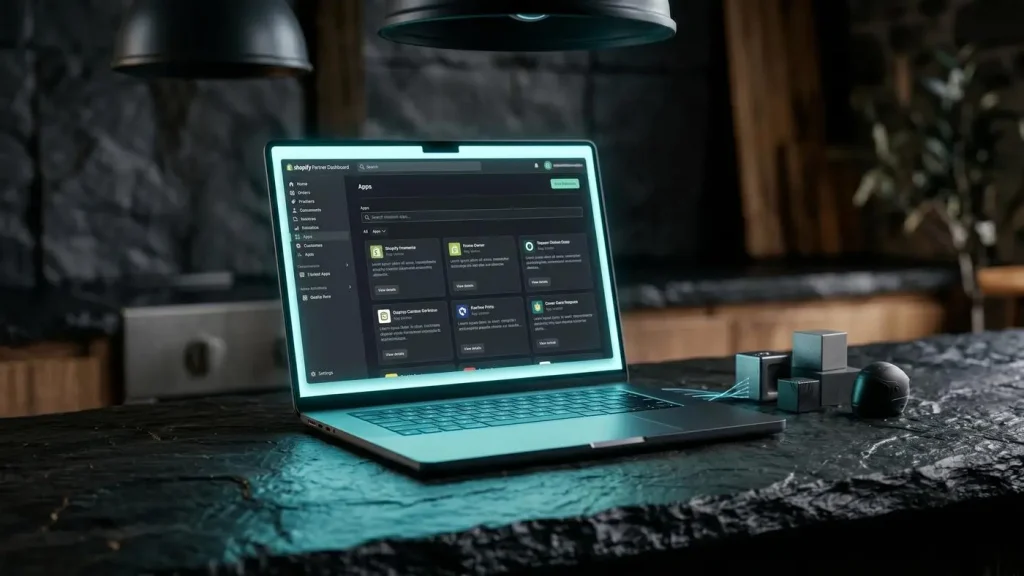
The Partner Dashboard is the control center for your Shopify partner activity.
From there, you can manage:
- Development stores.
- Client referrals.
- App listings.
- Theme listings.
- Payouts.
- Collaborator access.
- Team members.
- Partner education and resources.
Collaborator access is especially useful for freelancers and agencies. It allows you to request access to a client’s Shopify store without being added as a normal staff member. This keeps the working relationship cleaner and gives the merchant more control over permissions.
Education and Credibility
Shopify also gives partners access to educational resources, training, product updates, and skill-building materials.
These resources will not close clients for you, but they can help you stay current.
That matters because Shopify changes quickly. Checkout extensibility, theme architecture, APIs, Shopify Functions, markets, B2B features, and app requirements all evolve over time.
A partner who keeps learning becomes more valuable to merchants. A partner who stops learning becomes a liability.
The Three Main Ways Shopify Partners Earn Money
Shopify Partner income usually comes from three broad channels:
- Referral commissions from merchants you bring to Shopify.
- App revenue from selling apps through the Shopify App Store.
- Theme revenue from selling themes through the Shopify Theme Store.
There is also a fourth source of income that matters more than all of these for many partners:
Client service fees.
Shopify does not control what you charge clients for design, development, migration, strategy, CRO, maintenance, or retainers. That money flows directly from the client to you.
For most freelancers and agencies, Shopify’s program payouts are not the business. They are an additional benefit on top of the real business: services.
Referral Commissions
When you create a development store for a client and transfer ownership correctly, that merchant can become a referral attached to your partner account.
Once the merchant activates an eligible paid plan, Shopify pays you a recurring commission based on the merchant’s subscription fee.
For standard Shopify plans, the commission is commonly around 20% of the merchant’s monthly subscription fee.
That means referral income can accumulate over time, but it usually starts small.
For example:
- A merchant on a low-tier plan may generate only a small monthly commission.
- A merchant on a higher-tier plan may generate a more meaningful monthly amount.
- Multiple referred clients can become a modest recurring income stream.
The important word is “modest.”
Referral commissions are real, but they are not usually enough to replace client work. They work best as a bonus layered on top of projects you are already being paid to deliver.
A freelancer who expects referral commissions to become instant passive income will probably be disappointed.
A freelancer who treats them as a long-term loyalty bonus will view them more realistically.
App Revenue Share
For developers building apps, the Shopify Partner Program opens the door to the Shopify App Store.
This can be a much larger opportunity than referral commissions, but it is also much more competitive.
Shopify’s app revenue-share structure gives smaller developers a strong starting advantage. Developers can keep 100% of their first $1 million USD in eligible lifetime app revenue, based on the current structure, and then Shopify takes a 15% share above that threshold.
Large developers can be subject to the 15% share from the beginning, depending on their prior earnings or company revenue.
There is also a billing processing fee, so app developers should not model their economics based only on the headline revenue-share percentage.
The key point is this:
The App Store can be a serious business, but it is not easy money.
A successful Shopify app usually needs to solve a painful merchant problem. Examples include subscriptions, reviews, shipping, B2B pricing, wholesale workflows, analytics, bundling, upsells, inventory sync, or checkout-related functionality.
Building the app is only the first part.
You also need:
- App Store optimization.
- Onboarding.
- Documentation.
- Merchant support.
- Reviews.
- Retention.
- Churn management.
- Bug fixes.
- Compliance with Shopify’s platform changes.
A Shopify app business is closer to a SaaS startup than a simple side project.
Theme Revenue Share
Theme developers can earn money by selling themes through the Shopify Theme Store.
The economics are more straightforward than app revenue. Theme developers generally keep 85% of eligible theme sales, with Shopify taking a 15% share.
The trade-off is quality control.
Getting a theme accepted into the Shopify Theme Store is difficult. Shopify has high standards for design, performance, accessibility, customization, merchant usability, and technical structure.
That makes theme development less accessible than basic freelance work, but the distribution can be powerful if your theme is accepted.
A strong Shopify theme can reach merchants who are actively looking for a professional starting point for their store.
However, theme builders should not underestimate the ongoing work.
You may need to provide:
- Theme updates.
- Bug fixes.
- Documentation.
- Merchant support.
- Compatibility adjustments.
- Improvements based on Shopify platform changes.
Like apps, themes are product businesses, not one-time uploads.
How Freelancers Make Money With the Partner Program
For freelancers, the Shopify Partner Program is mainly a workflow and margin improvement tool.
A practical freelancer playbook looks like this:
- Create a development store for each client project.
- Build the store before the client starts paying for Shopify.
- Transfer ownership when the project is ready to launch.
- Earn the eligible recurring referral commission.
- Use collaborator access for maintenance and support.
- Charge separately for build fees, retainers, audits, CRO, SEO, or ongoing support.
The real money is still in client services.
A freelancer might earn a few dollars per month from a Basic-plan referral, but they might earn hundreds or thousands of dollars from the store build itself.
That is why referral commissions should not determine your pricing.
Do not undercharge for projects because you hope the recurring partner payout will make up the difference later. Clients can downgrade, churn, close their store, or move to another setup. Your service pricing should stand on its own.
The partner commission is upside, not the foundation.
How Agencies Use the Program
Agencies use the same basic tools as freelancers, but at larger scale.
A Shopify agency may use the Partner Program to manage:
- Multiple development stores.
- Client transfers.
- Collaborator access.
- Migration projects.
- Shopify Plus opportunities.
- App partnerships.
- Theme partnerships.
- Ongoing retainers.
For agencies, partner status can become more strategic.
As an agency drives more merchant revenue and more platform activity, higher partner tiers may become relevant. These tiers can unlock better support, stronger relationships with Shopify, co-selling opportunities, and more visibility in enterprise conversations.
This matters most for agencies working with Shopify Plus or larger merchants.
For a small agency serving local businesses or basic stores, the main benefits remain the same as they are for freelancers: free dev stores, clean access management, and referral commissions.
How App and Theme Developers Use the Program
For product builders, the Partner Program is less about client workflow and more about distribution.
App developers use development stores for testing, QA, demo environments, and merchant simulations.
Theme developers use the ecosystem to build, test, submit, and maintain themes for merchants.
The upside can be much higher than service work because product revenue can scale beyond your available hours.
But the risk is also higher.
A freelancer can sell a store build and get paid within weeks. An app developer may spend months building a product before earning meaningful revenue. A theme developer may invest heavily in a theme that never gets accepted or never sells well.
Product income is scalable, but uncertain.
Service income is less scalable, but more predictable if you can find clients.
That distinction should shape how you approach the program.
Realistic Earnings: What Most People Should Expect
The Shopify Partner Program can generate meaningful income, but the distribution is uneven.
A small number of app companies and agencies can build very large businesses inside the Shopify ecosystem. Many other partners make little or nothing directly from program payouts.
This is not a failure of the program. It is how ecosystems work.
Referral Income Builds Slowly
Referral commissions are recurring, but they are usually small per merchant.
If you transfer one small client store per month, your monthly partner payout after a year may still be relatively modest.
That income is useful. It can cover tools, hosting, software subscriptions, or part of your operating costs. But it should not be treated as a salary replacement.
App Income Has Startup Economics
A successful app can generate strong monthly recurring revenue. But most apps do not become breakout successes.
The Shopify App Store is competitive. Merchants compare reviews, pricing, screenshots, support quality, feature depth, and whether the app solves a problem they truly care about.
The apps that win often serve urgent merchant needs.
A “nice to have” app is harder to sell than an app that protects revenue, saves time, increases conversion, solves compliance, or removes operational pain.
Services Remain the Most Reliable Path
For most partners, services are still where the money is.
A freelancer charging a healthy project fee or monthly retainer will usually earn far more from client work than from Shopify’s referral payout.
An agency delivering migrations, builds, CRO, strategy, and integrations can turn Shopify expertise into a serious services business.
The Partner Program supports that business. It does not replace it.
Shopify Partner Tiers
Shopify has formal partner tiers that reflect the level of business a partner drives through the ecosystem.
Most partners begin at the registered level.
Higher tiers may become available as a partner drives more referral revenue, manages more merchant activity, or meets specific program requirements.
Typical tiers include:
- Registered
- Select
- Plus
- Premier
- Platinum
The exact requirements can change, so partners should always check Shopify’s current documentation before planning around a specific tier.
For small freelancers, tiers usually do not matter much.
The basic partner account already gives you the tools you need: development stores, dashboard access, collaborator access, referrals, and education.
For larger agencies, tiers matter more because they can affect strategic support, co-selling, enterprise opportunities, and Shopify relationship management.
If you are not serving larger merchants or Shopify Plus clients, do not obsess over tiers.
Focus on getting better clients, delivering stronger work, and building a reputation. The tier only matters when your business volume makes it relevant.
Shopify Partner Program vs Shopify Affiliate Program
The Shopify Partner Program and Shopify Affiliate Program are often confused, but they are built for different people.
The Partner Program is for people who work directly on Shopify stores or products.
The Affiliate Program is for people who refer merchants through content, education, reviews, newsletters, videos, or other traffic channels.
The earning models are different.
A partner referral usually comes from building or transferring a development store and can generate recurring commission.
An affiliate referral is usually based on tracked links and may pay a one-time bounty when a qualified merchant signs up.
Which one is better depends on your business model.
If you are hands-on with the store build, the Partner Program usually makes more sense.
If you run a blog, YouTube channel, newsletter, course, or comparison site that sends many people to Shopify without building their stores, the Affiliate Program may be a better fit.
Some people can use both, but a single merchant referral generally cannot pay through both systems at the same time.
Common Mistakes Shopify Partners Should Avoid
The Partner Program is useful, but beginners often make the same mistakes.
Treating Development Stores Like Live Stores
Development stores are for building and testing.
They are not meant to run real businesses indefinitely.
The correct process is:
Build the store.
Transfer ownership to the client.
Have the client activate an eligible paid plan.
Continue work through collaborator access if needed.
Trying to keep a real merchant operating on a development store to avoid subscription fees can violate program rules and put your account at risk.
Expecting Passive Income
The phrase “passive income” creates unrealistic expectations.
Referral commissions require client work.
App revenue requires product development and support.
Theme revenue requires design, development, review, updates, and support.
There may be recurring revenue, but it is not effortless.
A better way to think about the program is this:
Shopify Partner income is earned income with recurring upside.
Misrepresenting Your Relationship With Shopify
Being a registered Shopify Partner does not mean you are an official Shopify employee, official Shopify agency, or certified Shopify Expert.
Do not exaggerate your status.
Misrepresenting your relationship with Shopify can damage client trust and create compliance problems.
Use accurate language.
You can say you are a Shopify Partner if that is true. But do not claim a higher level of approval, certification, or endorsement unless you have actually earned it.
Ignoring the Partner Agreement
The Partner Program Agreement matters.
It controls how you can refer merchants, use data, access stores, market your services, and receive payouts.
Violations can lead to account termination and loss of future commissions.
Partners should review the agreement regularly, especially if they are building apps, managing client data, running promotions, or relying on recurring payouts.
Letting Skills Go Stale
Shopify changes constantly.
A partner who was highly capable two years ago may be behind today if they have not followed platform updates.
Important areas to monitor include:
- Checkout extensibility.
- Shopify Functions.
- API version changes.
- Theme architecture.
- App Store requirements.
- Markets and international selling.
- B2B features.
- Performance standards.
- Privacy and data requirements.
Ongoing learning is not optional if you want to stay useful to merchants.
Who Should Join the Shopify Partner Program?
The program is free, so there is very little downside to creating an account.
However, not everyone should treat it as a serious business opportunity.
You Should Join If You Are:
- A freelancer building Shopify stores.
- A developer learning Shopify.
- A designer working on Shopify themes.
- An agency serving ecommerce clients.
- A consultant helping merchants migrate to Shopify.
- An app developer planning to sell through the Shopify App Store.
- A theme developer targeting Shopify merchants.
- A marketer or CRO specialist working directly inside Shopify stores.
For these people, joining is an obvious decision.
The free development stores alone are enough to justify the account.
You Should Not Rely on It If You Are:
- Looking for passive income without client work or product work.
- A merchant who only wants to run your own store.
- Someone expecting Shopify to send clients automatically.
- A beginner with no clear service, product, audience, or positioning.
- Someone unwilling to keep up with platform changes.
Again, there is no major downside to joining. The problem is not the account itself.
The problem is building unrealistic expectations around it.
How Successful Partners Actually Find Clients
The Partner Program gives you tools, but it does not build your reputation for you.
Successful Shopify freelancers and agencies usually find clients through a combination of:
- Portfolio work.
- Case studies.
- Referrals.
- Niche positioning.
- Content marketing.
- Community involvement.
- App or theme visibility.
- Partnerships with other agencies.
- Strong reviews and testimonials.
- Clear service offers.
If you are a freelancer, your goal should not simply be “become a Shopify Partner.”
Your goal should be to become known for a specific outcome.
For example:
- Shopify migrations for fashion brands.
- CRO audits for Shopify Plus stores.
- Custom Shopify theme development.
- Subscription setup for DTC brands.
- Shopify B2B implementation.
- App integrations for inventory-heavy stores.
- Speed optimization for large Shopify catalogs.
Specific positioning is easier to sell than general availability.
“Shopify developer” is a crowded category.
“Shopify developer who fixes slow collection pages for high-SKU stores” is much clearer.
Is the Shopify Partner Program Worth It in 2026?
For anyone doing real Shopify work, yes.
The program is free, the development stores are useful, collaborator access is practical, and referral commissions add upside to client work you are already doing.
For freelancers and agencies, the Partner Program is absolutely worth joining.
For app developers and theme builders, it is also worth joining, but the expectations should be different. You are entering a competitive product market, not collecting easy money.
For passive-income seekers, the program is usually not a good fit.
Every meaningful revenue stream inside the Shopify Partner ecosystem requires work:
- Client work.
- Product development.
- Merchant support.
- Sales.
- Marketing.
- Maintenance.
- Platform learning.
The strongest reason to join is not that Shopify will pay you automatically.
The strongest reason to join is that the program gives you the infrastructure to build a Shopify-focused business more professionally.
Key Takeaways
The Shopify Partner Program is best understood as a toolkit and business layer for people building inside the Shopify ecosystem.
It gives you:
- Free development stores.
- A Partner Dashboard.
- Collaborator access.
- Referral tracking.
- App and theme distribution opportunities.
- Education and ecosystem resources.
- Potential recurring revenue.
But it does not give you:
- Guaranteed clients.
- Automatic authority.
- Passive income.
- Instant App Store success.
- A replacement for service pricing.
- Immunity from competition.
If you are already building Shopify stores, apps, themes, or client services, join the program.
Use development stores properly.
Charge real fees for your work.
Treat referral revenue as a bonus.
Stay current with Shopify changes.
Avoid exaggerated claims.
Build a reputation around a clear specialty.
That is where the program becomes valuable.
Not as a shortcut to income, but as a professional foundation for doing Shopify work at a higher level.
Sources and methodology
Primary documentation below was used to verify platform behavior and product availability. Features, pricing, policies, and eligibility can change; confirm current details at the linked source before making a purchase or business decision.